How to Plan a Trip to Austria
Planning a trip to Austria is fun – but not nearly as much fun as actually going to Austria. And you wouldn’t think that planning a vacation to a European country roughly the size of Maine would be all that complex.
Truth is, Austria is surprisingly diverse considering its size, and planning a trip there requires some serious planning.
Planning A Trip To Austria: What You Need To Know
Here are the things to consider when planning a trip to Austria:
- When to visit Austria
- Types of Austrian trips
- Regions of Austria to visit
- Things to do in Austria
- Packing for a trip to Austria
- Special requirements for traveling to Austria
- Buying travel insurance for a trip to Austria
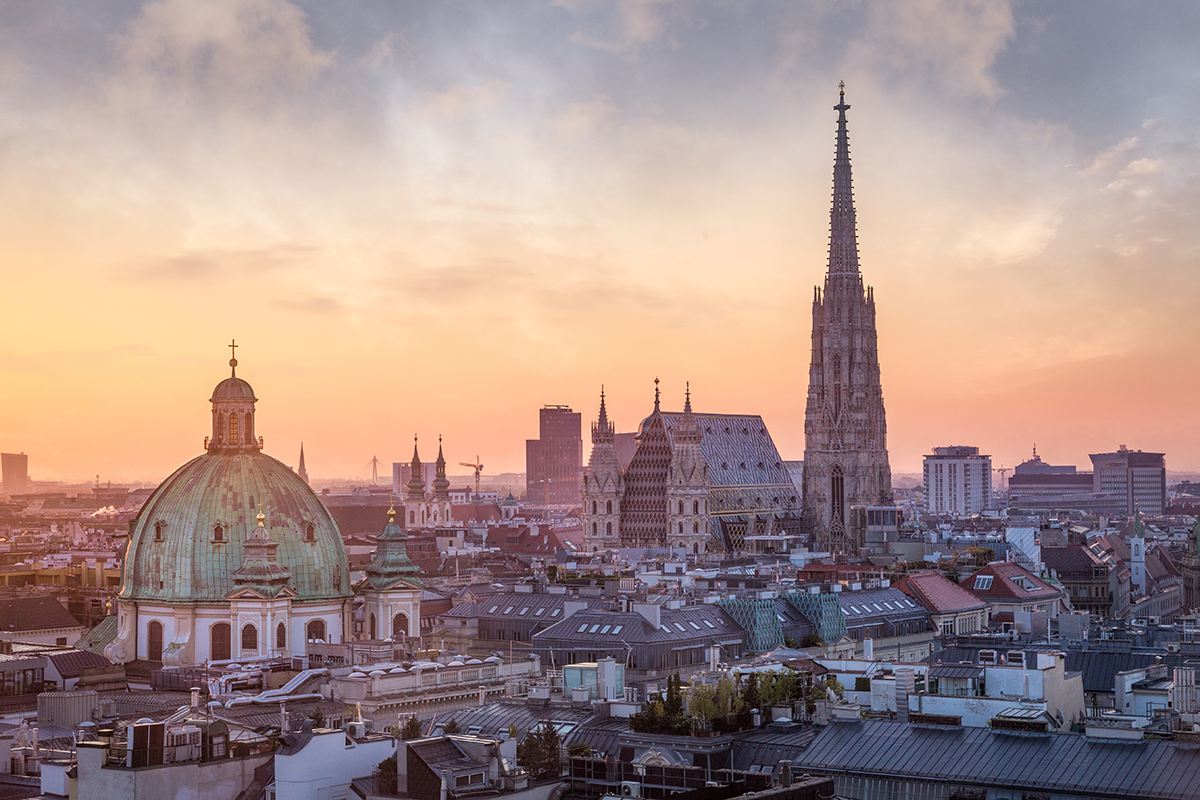
When To Visit Austria
Austria has four full seasons, though in some regions of Austria they may not be as extreme as what people in the Upper Midwest and Northeast may be used to.
Winter (December-February)
Some regions of Austria have less-extreme seasons than parts of the U.S. But other regions are in the mountains, and winters can be quite snowy and cold. Ski vacations in Austria are wonderful. The mountains around Kitzbühel and Innsbruck have hosted several Olympics, and boast runs for skiers of all ability levels.
The ski towns themselves are jewels; snug and charming, and priced like jewels, too.
If you’re not heading to the mountains but want a quiet sojourn in Vienna, winters are a fine time to travel to Austria. Prices are lower, tourists are few, museums and concert halls are less crowded, but the coffee and Sachertorte are good as ever.
Spring (March-May)
Spring in Vienna conjures up images of walking down park lanes with the chestnut trees budding. Vienna can definitely deliver on that promise.
Later spring is a time to explore the countryside, perhaps on a bike tour from Cycling Holidays Austria. The views are spectacular, the flowers are gorgeous, and everything is just about as you dreamed it would be.
Temps are in the 50s and 60s, making biking comfortable and walking around fun and easy.
Later spring is also prime river-cruise season. Danube tours are particularly popular, and while they’re not restricted to Austria, they spend a lot of time in the country, giving you hints as to places you’d like to visit next time.
Summer (June-August)
Summer is tourist season, with more people, higher prices, lines, ticket shortages, and pressure on lodging, but it’s still a great time to visit Austria.
The festivals, such as Salzburg’s famed summer music festival, will be crowded and Switzerland levels of expensive. However, other parts of Austria, such as the region bordering Slovenia, are less traveled and worth exploring in summer, as they don’t lack for scenery or history.
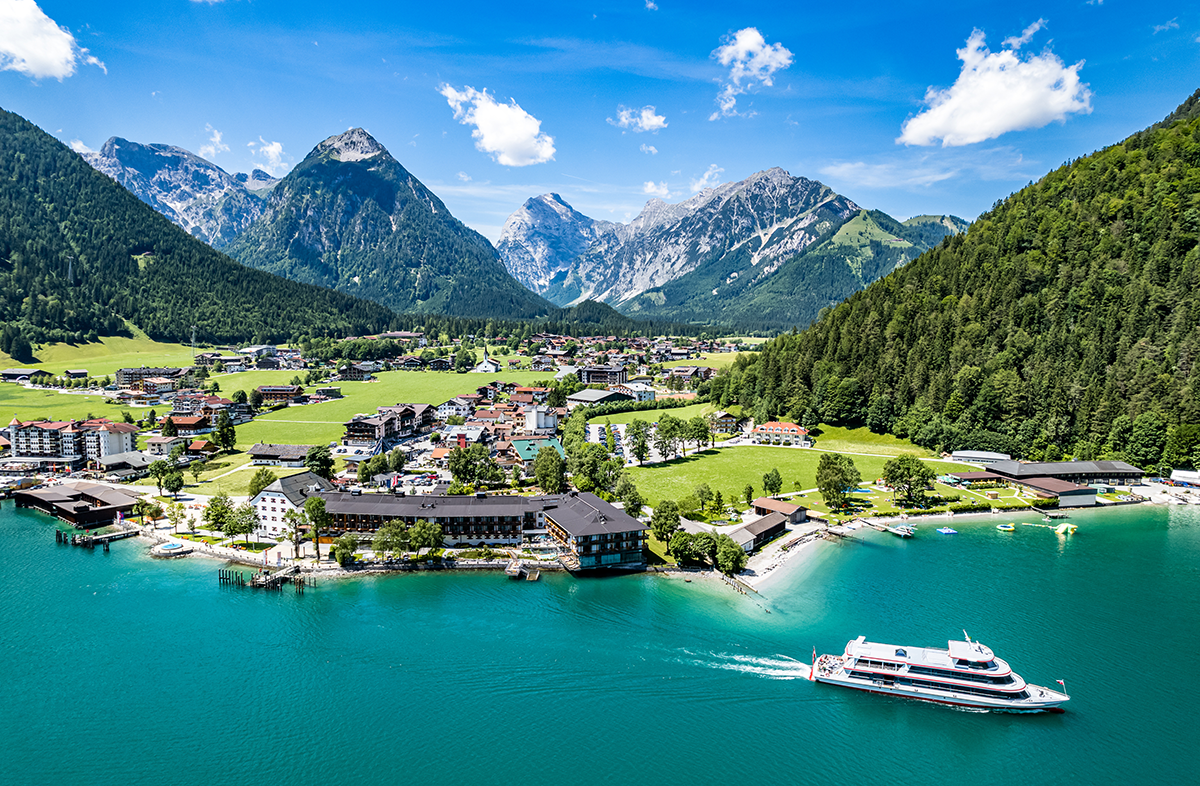
Summer is also a great (though touristy) time to visit the Tyrol. Austria’s western mountain region is home to numerous delightful villages, with festivals and events that celebrate the region’s unique heritage.
Autumn (September-November)
Another calmer time to visit Austria, autumn brings fall colors (late September-October in the lower altitudes, earlier September in the mountains) as well as cooler temperatures and more precipitation.
It’s the time to ride the trains around the country. There are fast trains that connect the major cities as well as slower trains that traverse the countryside. A travel advisor can help you craft a fall train-centered vacation that includes stops in mountain towns as well as major cities.
Types Of Austrian Trips
As mentioned earlier, Austria is not particularly large. That’s good news if you’re taking a vacation of a week or less and want to see a lot of one country.
That’s also good news if you want to combine an Austrian ski trip with, say, a couple of days in Vienna. What if your vacation is several weeks? Does sticking to Austria alone still make sense?
Yes, under a couple of conditions:
- You’re doing slow travel – hiking or biking
- You have a particular avocation or interest, like music or art museums
If that’s not you, then it’s a good idea to make Austria part of a multicountry vacation. Hungary, Germany, Switzerland, and Italy are all good choices for classic tourist travel; Czechia and Slovenia offer off-the-beaten-path charms.
With either type of multicountry vacation Austria is a great central location for coming, going, and sightseeing.
Regions Of Austria To Visit
Austria is partially but not completely defined by its geography.
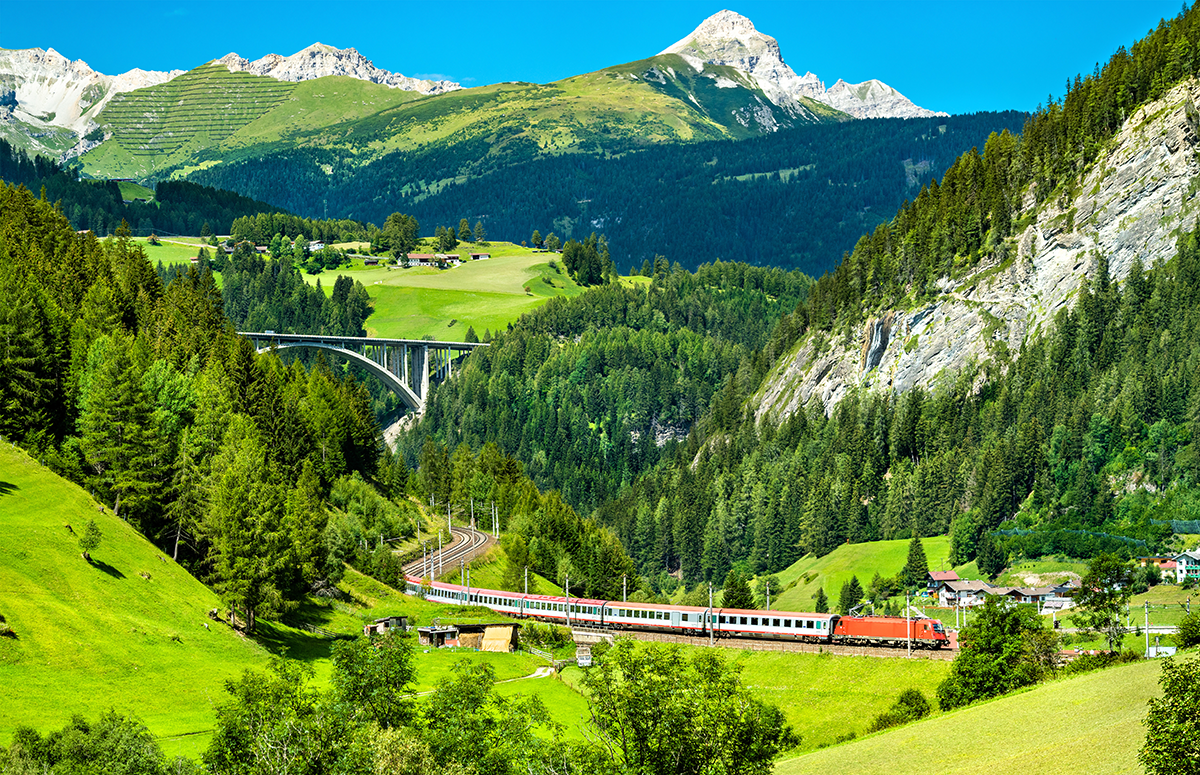
- The Austrian Alps' strategic location for travel and trade make them a unique region – well-traveled yet rugged and sometimes treacherous. They help make the Tyrol accessible and slightly more worldly than other mountainous regions In Europe.
- Southwestern Austria borders the Italian Alps and shares many of the same characteristics of the western alpine region.
- Southeastern Austria is more hilly than mountainous, full of lakes and traversed by rivers.
- Central Austria is a large plain – easy to get around and home to major cities like Vienna.
Most of Austria is wooded; in fact, it’s one of Europe’s most heavily forested countries. “Tales of the Vienna Woods” is no joke – there really are Vienna woods. In summer every part of Austria is drivable. In other seasons, you should check road conditions before heading into the mountains.
Things To Do In Austria
Things you can do in Austria break readily into four areas:
- Cultural activities – music, art, and such
- Culinary activities – eating and drinking
- Historical activities and sightseeing
- Active activities
Cultural activities
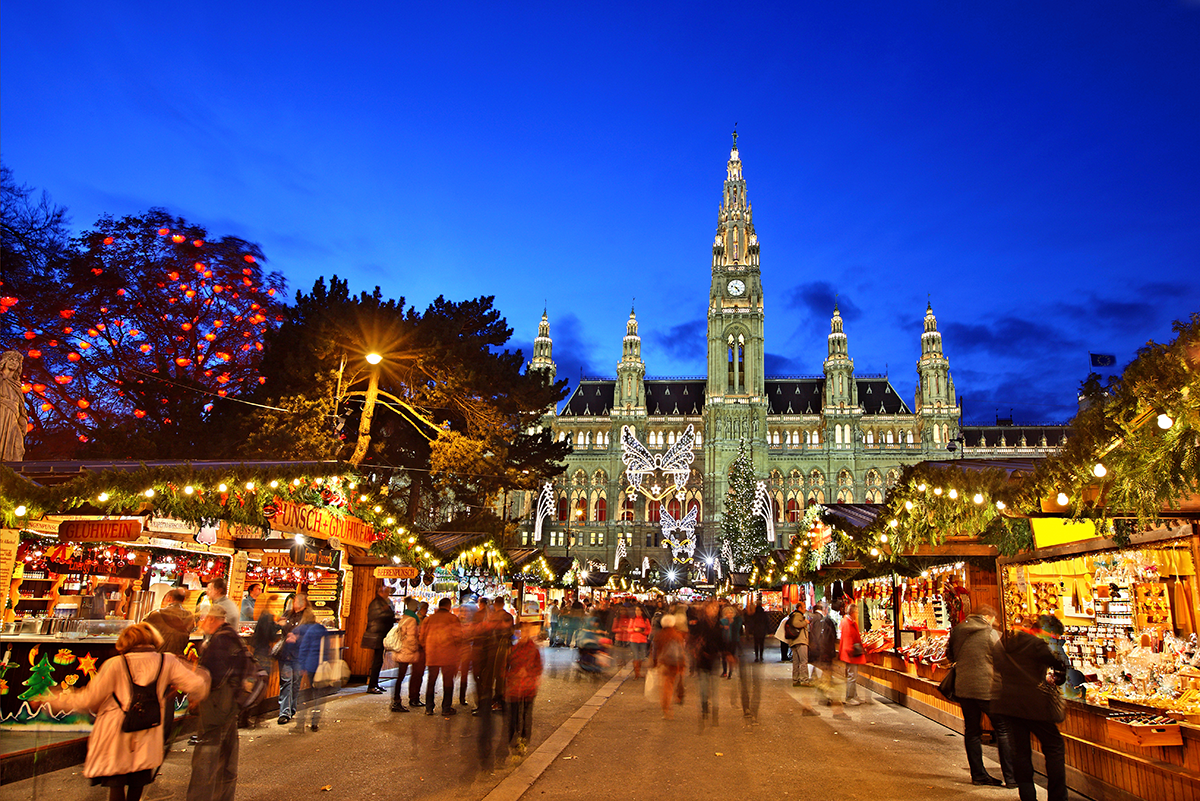
Vienna and all of Austria have historically been one of Europe’s great cultural centers.
Part of the reason is Austria’s position as a crossroads of central Europe. Germany in the north, France in the west, Italy in the south, Hungary in the east – all their roads led to Vienna.
The legacy of this is great music, great places to hear music, and wonderful museums.
MUSIC FESTIVALS
The Salzburg summer music festival is perhaps the world’s finest music festival. Mozart is always on the menu but all forms of classical music can be heard, right up to the most modern works.
The festival is held in July and August, and tickets are almost impossible to get. That doesn’t mean you shouldn’t try.
Salzburg is a city of music festivals, much as it was portrayed in The Sound of Music. If you can’t swing the summer festival try the Easter Festival (held during Holy Week) or the Baroque-leaning Whitsun Festival (Pentecost weekend in late May or early June).
Austrian music festivals aren’t restricted to Salzburg. There's also:
- The Bregenz Festival, with opera on a spectacular floating stage on Lake Constance
- The Grafenegg Festival, a classical-music festival at an historic castle in Lower Austria
- The Wiener Festwochen (Vienna Festival Weeks), a five-week performing-arts festival held in May and June
- The Innsbruck Festival of Early Music, with performances in historic Tyrolean venues
CONCERT HALLS
The Vienna State Opera is to concert halls what the Salzburg festival is to music festivals. The Vienna Philharmonic is not surprisingly one of the world’s great orchestras, and concert tickets are understandably hard to come by.
Once again, that doesn’t mean you shouldn’t try it if you truly love classical music. Shut out of the Vienna State Opera and the Philharmonic? Don’t despair. Consider:
- The Musikverein, one of the world’s finest concert halls and home of the world-famous Golden Hall and the Vienna Philharmonic’s New Year’s Concert
- The Wiener Konzerthaus, an elegant Art Nouveau venue that’s home to the Vienna Symphony
- The Volksoper Wien, Vienna’s dedicated opera and operetta house, with a more accessible, affordable program
- Chamber concerts in historic churches throughout the city, including the Karlskirche and Augustinerkirche
ART MUSEUMS
Befitting its status as a crossroads, Austria has had much art pass through its borders – and some of it came and stuck.
The country’s best art museums include:
- The Kunsthistorisches Museum (Vienna): The Austrian Louvre, this museum has the Habsburg imperial art collection with masterworks by Bruegel, Vermeer, Rubens, and Caravaggio
- The Belvedere (Vienna): A Rococo palace with the world’s largest collection of Gustav Klimt paintings, including the iconic “The Kiss”
- The Albertina (Vienna): Famous for its massive graphic-art collection, with works by Monet, Picasso, and Dürer
- The Leopold Museum (Vienna): Home of Viennese Modernism and the world’s largest Egon Schiele collection
You won’t hear Austria’s art museums spoken of in the same terms as the museums of Italy, France, or even the Netherlands. However, if you love art they’re worth visiting nonetheless.
Culinary activities
The food’s good in Austria. Italian, French and German influences combine with Austria’s imperial heritage to create a cuisine that’s high on spectacular dishes (and calories).
Some of the specialties include:
- Wiener Schnitzel: Spelled to indicate its origin (“Wien” is German for “Vienna”), this breaded-and-sauteed veal cutlet is spectacular when it’s done right, ideally prepared tableside to give you dinner and a show.
- Knoedel: These boiled dumplings are often served alongside ...
- Schweinbraten: Slow-roasted pork.
- Apfelstrudel: Or as you might know it, apple strudel.
- Sachertorte: Austria is world-renowned for its desserts, and this glazed combination of chocolate and apricot jam is both deceivingly light and marvelously decadent.
Historical activities and sightseeing
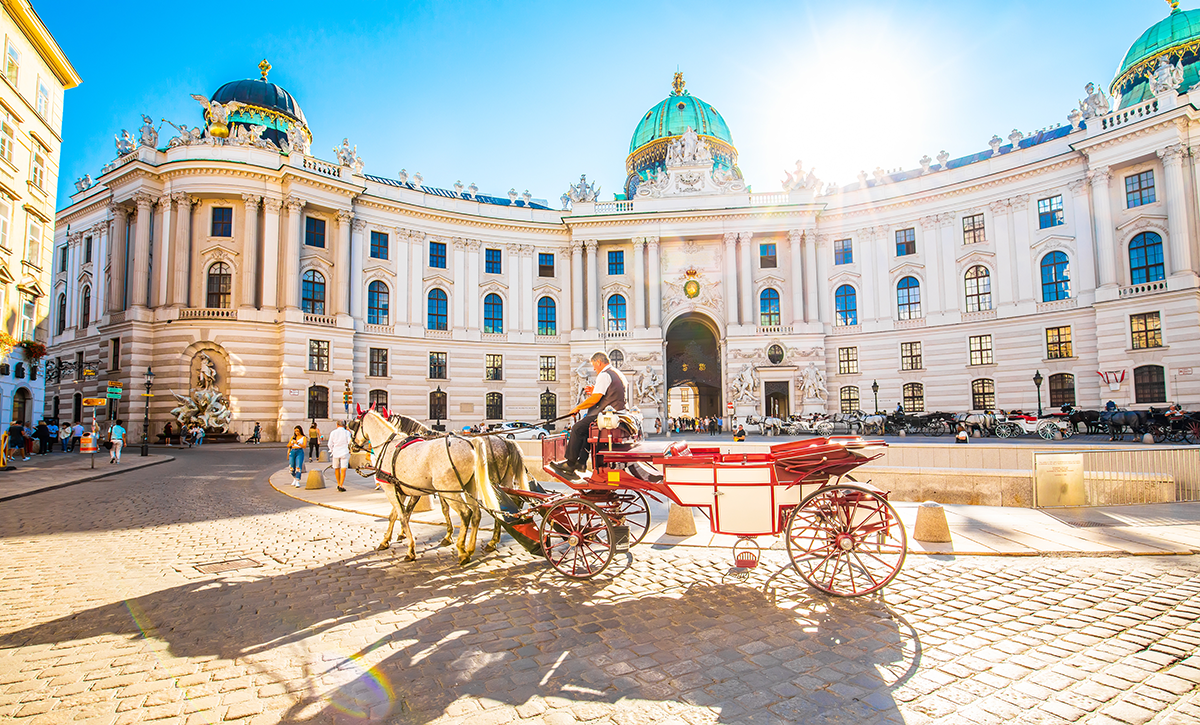
In the true European manner, virtually every Austrian city has a historical old town, a cathedral worth walking through, a central square, ideally with a market, cobblestone streets, small coffeeshops and restaurants, and book and art stores.
As a result, a lot of Austrian sightseeing simply involves heading into a city, either by driving, taking mass transit or exiting an intercity train, and literally walking around and seeing the sights.
There can and should be more intentional sightseeing, especially if you don’t have much time in Austria.
Not-to-be-missed places include:
- Innsbruck’s historic center, a UNESCO-listed old town with its medieval Golden Roof and imperial architecture
- Central-city Vienna, including the Hofburg Palace, Schönbrunn Palace, the Ringstrasse boulevard, and many locations featured in the classic film The Third Man
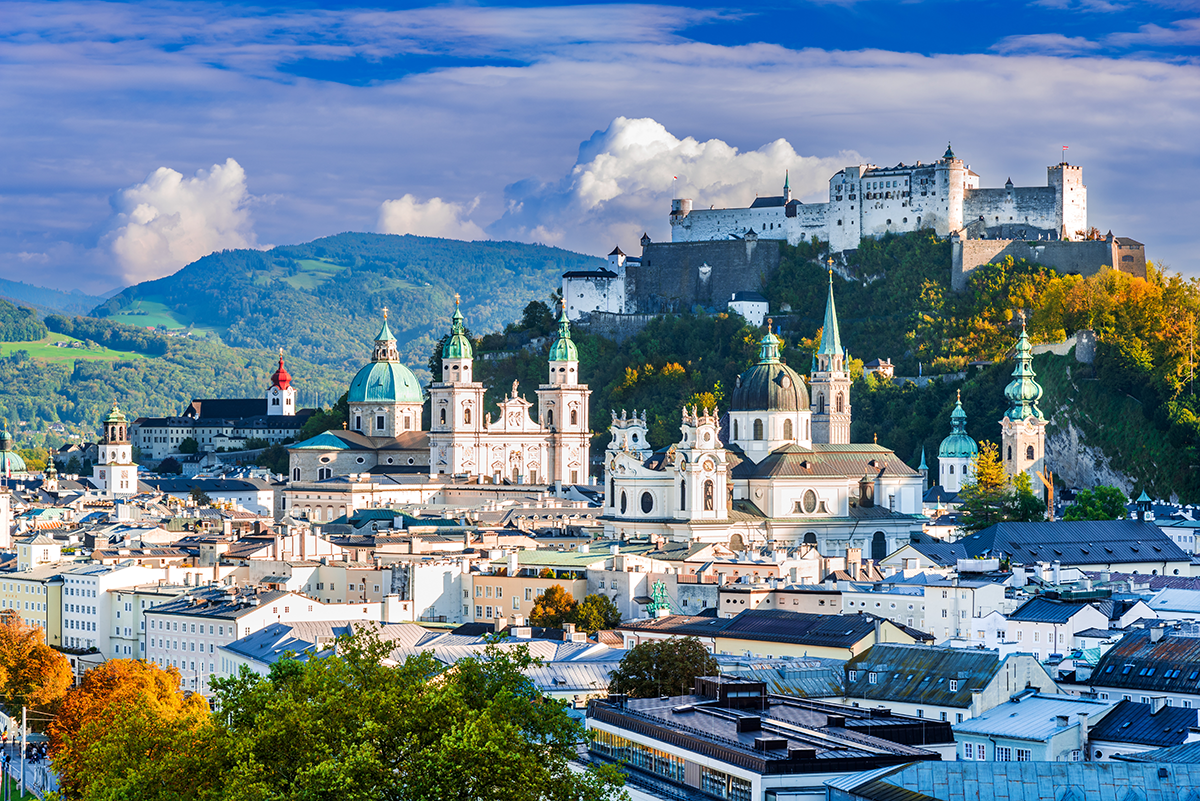
- Salzburg’s Altstadt (Old Town), a UNESCO World Heritage Site, with Baroque churches and Mozart’s birthplace
- Hallstatt, one of the world’s most photographed villages, perched on a glacial lake in the Salzkammergut
- Graz, Austria’s second-largest city, with a Renaissance old town and vibrant arts scene
Active activities
You can stay very active in Austria just by walking; every city has so much to see. However, if you want to be more intentional about living the strenuous life the major activities are:
HIKING
Austria is a hiker's paradise, with more than 50,000 kilometers of marked trails, many in the Alps or Alps-adjacent regions. The expansive Hohe Tauern National Park features dramatic scenery centered on the Grossglockner, the country's tallest mountain, and the spectacular Krimml Falls – the highest in Europe.
The Salzkammergut lake district is another hiker fave, where doable trails connect storybook lakes and villages. Hut-to-hut hiking is an Austrian tradition. Alpine huts (Berghütten) are spaced a day's walk apart, with meals, beds, and an unforgettable spirit of conviviality at trail's end.
BIKING
Dedicated bike paths, clearly marked cycle routes and respect for cyclists make Austria a great country to explore on two wheels. The Danube Cycle Path (Donauradweg) follows the river from Passau on the German border to Vienna and beyond. The terrain is on the less-challenging side – no Alps – and the towns and views can't be beat.
The Innradweg, following the Inn River through the Tyrol, and the Salzach Cycle Path through the Salzburg region are likewise scenic and well-maintained. For Austrian mountain biking – as in careening down a ski hill, then taking a lift back up and doing it again – the Arlberg region and the Ötztal Valley can't be beat.
Bike rentals are widely available, and e-bikes make this mode of transport available to just about everyone.
SKIING
Austria might be the world's greatest ski nation, though France and Italy would like a word. Its ski resorts combine challenging runs, charming atmospheres, and the OG après-ski culture.
The Arlberg region, including St. Anton am Arlberg, Lech and Zürs, is legendary. Modern alpine skiing was basically invented here – including what you do after a day on the slopes.
Kitzbühel is Austria’s most glamorous ski town. The skiing is excellent, the town is beautiful and the prices reflect it. Innsbruck has hosted the Winter Olympics twice and sits in the middle of an array of ski areas accessible by a single pass, making it a great base of operations.
For families or less experienced skiers, resorts like Sölden, Schladming, and the SkiWelt Wilder Kaiser-Brixental offer gentler terrain and excellent ski schools.
Packing For A Trip To Austria
Unless you’re traveling only to the lowland portions of Austria in the summer, the watchwords are going to be: pack layers.
Every other trip type or time of year presents you with a smorgasbord of weather possibilities – and even midsummer in the lowlands require you to pack rainwear and a light sweater or hoodie for evening strolls. For instance:
- River cruise in late spring: Pack a medium-weight jacket and enough different types of wardrobe options to wear a turtleneck under a sweater or a scoop-T with capris depending on how the weather breaks.
- Mountains in the summer: Pack waterproof hiking boots and performance gear, including a light vest, light gloves, and maybe even a beanie. Sunglasses and sunscreen are musts.
- Biking in the fall: Rainwear for sure, but also half-finger and full-finger cycling gloves. Given the number of foggy and misty days you can encounter in Austria, something hi-viz wouldn’t hurt.
- Cities in the winter: Scarves, hats, mitts, vests, sweaters, plus something water-repellent. You’re just as likely to get a sleety rain in many parts of Austria as you are snow.
- Winter ski vacations: Your gear, packed as you'd pack for any ski trip.
Get more sample packing lists in our multi-cruise packing-list blog.
Special Requirements For Travel To Austria
There’s not a lot you need to travel to Austria than you might need to travel internationally anywhere else.
Obviously, your passport needs to be in good shape. If it’s due to expire in the next six months, renew it. After it’s renewed, make several copies of it. Carry one with you and leave another at home with a trusted friend or relative.
The Schengen Area
Austria is part of the Schengen Area. We’ve covered this elsewhere, but the Schengen Area was created so most European residents can travel between countries without having to go through the whole customs-and-immigration thing.
There is a Schengen Visa which covers travel to countries in the Schengen Zone, but Americans don’t need one ... yet.
There’s also a fee that all visitors to the Schengen Area are supposed to pay, including Americans. The fee and its accompanying form have been promised since 2022, and it’s still not in effect. Maybe late 2026. Maybe.
Buying Travel Insurance For A Trip To Austria
As you can see, traveling to Austria isn’t necessarily fraught with danger, though things can happen to make your trip significantly more difficult.
You could encounter travel delays or experience medical emergencies. You could lose your luggage. Or something could happen back home that would force you to cancel or interrupt your trip.
Travel insurance can help lessen the impact of these travel mishaps. Travel insurance from Berkshire Hathaway Travel Protection is available in many different forms to precisely fit your trip.
With an easy quote process and a fast claims process, getting protected is easier than you think. Get a quote and see for yourself.
Planning A Trip To Austria: The Bottom Line
Austria may not get all the press of its neighbors France, Italy, and Germany, but Austria has everything you might want from a European destination in a slightly more compact package.
If that sounds good to you, consult your travel professional, ask your favorite AI tool, read some reviews, or just dream. However you choose to get the process started, with our tips an unforgettable trip to Austria is in the bag.
Have a great time!

Questions About Travel Insurance?
Check out our online guide, "What Is Travel Insurance All About?" We've provided in-depth answers to all your travel insurance questions, starting with the basics.